Wednesday, 3 April 2013

Anton Eberl

Like Schubert, Anton Eberl was a genuine Viennese, who was born and died in the imperial city.
A pupil and friend of Mozart, he was something of a rival of Beethoven, both as piano virtuoso and composer. After Mozart's death he had supported his friend's widow, Konstanze for many years. Finally he could evade her influence; in 1797 he went to St. Petersburg and started a carrier as a teacher and composer at the tsar's court. Back in Vienna, he composed an impressive oeuvre after 1803. In 1807 he died of blood-poisoning. His piano music, as far as has been determined, consists of sonatas, sets of variations, fantasies, rondos, dances etc. Further he wrote four piano concertos, five symphonies, chamber music, lieder and some works for the stage.
Review of Eberl's works by his contemporaries compared his symphonies and piano concertos - among them the Concerto in C major op.32 premiered by Eberl himself in 1803 and recorded here for the first time - with those of Mozart, Haydn and Beethoven. Eberl's piano music exhibits not only an early dependence upon the influence of Mozart, but also his departure from the style of his teacher for the more romantic idiom od the early 19th century.


Tuesday, 2 April 2013

Monday, 1 April 2013

Clementi
toccata or sonata?
The mystery of opera XI
Answer? He wrote both and were listed under opus 11. The question is, did he listed it himself, or have been wrongly listed by his predecessors? There is an autograph copy according to RISM. Anyway, the sonata has been omitted in opus 11 according to Litolff edition, but I found it in a book of Clementi sonatas in the Spanish library. The lucky thing is, Shelley and Spada recorded it.

Piano Sonata in E-flat major op.11/1
Allegro con grazia


Rondo (Allegro spiritoso)


Saturday, 30 March 2013

RELAXING with FIELD

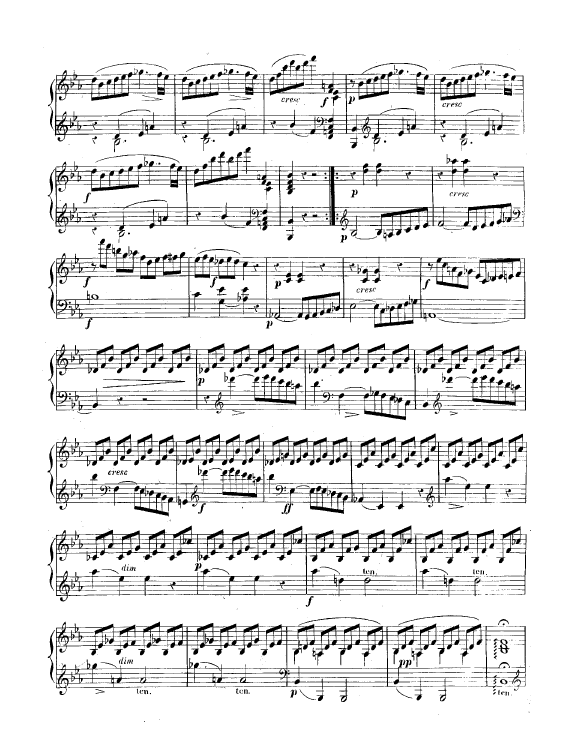
Piano Sonata in E-flat op.1nr.1
 Field's three Piano Sonatas were published in London in 1801 as Opus 1 with a dedication to Clementi, seemingly marking the beginning of a possible career as a composer. The sonatas are each in two movements, lacking a central Adagio. They reflect contemporary influences, notably that of Clementi an of Dussek, who was in London in the 1790s. The sonata-form first movement of Sonata in E-flat major is followed by a lively Rondo, its principal theme accompanied by wide leaps in the left hand. 


Allegro moderato


Rondo (Allegretto)


CLEMENTI
and his monferrines

According to Grove,

A country dance, Piedmontese in origin, popular in England in the early 19th century (sometimes called ‘monfrina’, ‘monfreda’ or ‘manfredina’). Typical examples, in 6/8 metre, appear in Wheatstone’s Country Dances for 1810 and Companion to the Ballroom (c1816). Clementi composed two sets, of 12 (op.49, 1821) and six (wo15–20).
 Unique little dances that shaped the pianistic craftmanship of Clementi, comparing to minuets, these dances deserved to be better known.

Monferrina WO15
Credits to Alex for contributing the score. Please note that this score is intended for educational purposes. Please respect existing copyrights.


Monferrina WO16
Credits to Alex for contributing the score. Please note that this score is intended for educational purposes. Please respect existing copyrights.


CLEMENTI
early piano sonatas#2

Piano Sonata in F major WO3

Clementi, like all composers for the emerging amateur
music market, needed to balance his own artistic
ambitions against the tastes and abilities of his intended
audience. In the sonatas of his middle London period
he often managed this very well. The unpretentious first
movement of the Sonata WO3 (‘WO’ means without opus
number) has an engaging, if disquieting, rhythm that
responds throughout to the accented second beat of the main theme.
Hyperion 
By examining the style of this sonata, its much complicated comparing to the former sonatas posted,  it used a theme that is leaning to the minor but falls back to the major instantly, a rather rare* style of Clementi sonatas. Here are 2 tracks played by Shelley.
*I was rather curious this sonata had been composed by Clementi or wrongly attributed.

1st:vivace


2nd:rondeau

Friday, 29 March 2013

Clementi
Early piano sonatas

Piano sonata in A-flat major WO13

Clementi’s earliest surviving composition is the three movement solo Sonata in A flat major, WO13 (‘WO’means ‘without opus’), composed in 1765 when the
thirteen-year-old was still in Rome. This piece and the sonatas of Op 1 (1771), while at points betraying their composer’s youth, show that he was fully conversant with the European keyboard practices of the time, while
also revealing some real strokes of originality. For the most part this music consists of a spare melody-plus accompaniment texture typical of what even then was called galant style. But a movement such as the appealing final Menuetto of Op 1 No 5, for all its simplicity, shows rather advanced rhythmic sophistication for a composer in his teens.
Hyperion
image details:This sonata comprises of 3 movement, namely Allegro ma non troppo, Larghetto and Allegro assai, whereas the 3rd and 4th pages of movements 1 and 3 and the entire 2nd movement had been omitted in this sample.
credits to Alex from PP for contributing the score.
Anyone who has keen interest in this sonata can have a look at Ut Orpheus website.
Track information: 1st and 3rd movements of this sonata played by Spada.(Shelley played a bit too fast in the 1st movement)

Allegro ma non troppo


Allegro assai